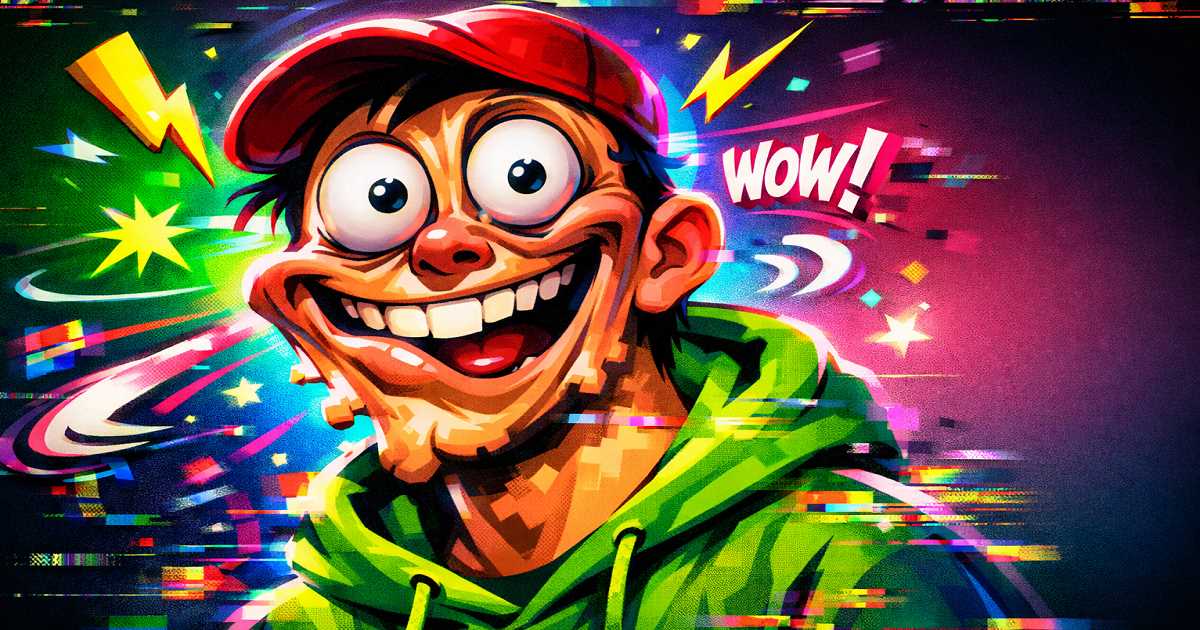
If you scroll TikTok, Instagram Reels, or YouTube Shorts, you have likely seen a strange kind of humor. It shows warped faces, blurry pictures, and loud cartoon sounds. This style is often called the “Goofy Ahh Man.” At first, the name sounds silly or confusing. Online, though, it has a clear meaning. It describes a type of joke that is weird, loud, and made to make people laugh fast. Many users see it every day. So what does “Goofy Ahh” really mean, and why is it everywhere now? Let’s break it down step by step.
The Etymology: Decoding “Goofy Ahh”
Before we can understand the “Man,” we must understand the adjective. The phrase “Goofy Ahh” is a phonetic spelling of “Goofy Ass,” filtered through the specific lens of internet text-to-speech generators and censorship workarounds.
From AAVE to TikTok Text-to-Speech
Linguistically, the structure borrows from African American Vernacular English (AAVE), where “ass” is frequently used as an intensifier for adjectives (e.g., “grown-ass man,” “stupid-ass decision”). However, the transformation into “Goofy Ahh” was catalyzed by TikTok’s content moderation algorithms and the platform’s text-to-speech features.
Creators realized that typing “Goofy Ass” might get their videos suppressed or flagged. By changing the spelling to “Ahh,” they bypassed filters. Simultaneously, the popular text-to-speech voices on TikTok pronounce “Ahh” with a prolonged, flat, or comical intonation that instantly became a meme in itself. It stripped the phrase of any aggression and replaced it with sheer absurdity.
For a deeper understanding of how dialects evolve and influence internet culture, Wikipedia’s overview of African American Vernacular English provides essential context on the grammatical roots that memes often borrow from.
The “Goofy Ahh” Aesthetic
Eventually, the phrase detached from its original meaning and became a descriptor for an entire aesthetic. A “Goofy Ahh” video isn’t just a video of a silly person; it is a specific multimedia experience containing:
- Visual Distortion: The “Goofy Ahh Man” usually features exaggerated facial features, often created using Snapchat filters like the “shook” filter or manual warping tools.
- Low Fidelity: Images are often deep-fried (intentionally pixelated and oversaturated) to look like they have been screenshotted a thousand times.
- The Soundboard: This is the heartbeat of the trend. We will discuss the audio landscape in detail later, but it relies heavily on stock cartoon sounds.
The term has become a catch-all for anything that feels “cursed,” “scuffed,” or delightfully stupid. It is the modern digital equivalent of slapstick comedy, but accelerated for an attention span of three seconds.
The Archetype: Who is the Goofy Ahh Man?
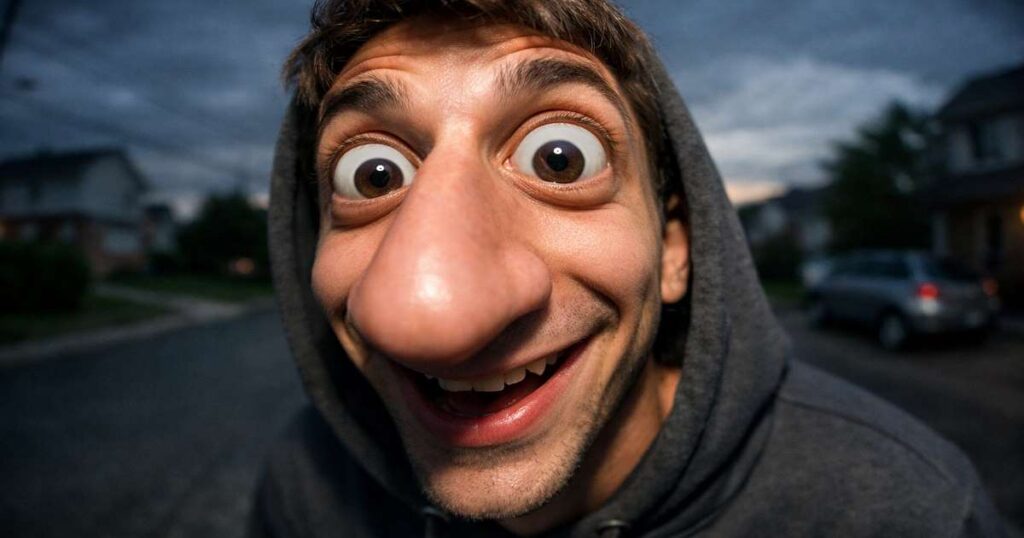
The “Goofy Ahh Man” is not a single person, but rather an archetype. However, there are specific visual markers that identify a character as belonging to this universe. When you see a Goofy Ahh Man, you recognize him immediately, even if you have never seen that specific image before.
Physical Characteristics
The standard avatar for this trend involves severe facial distortion. The most common features include:
- The Bulbous Nose: Often expanded to occupy 50% of the face.
- The Bug Eyes: Eyes that are either impossibly wide (using the “shook” filter) or tiny and beady.
- The Elongated Chin: A chin that stretches down, reminiscent of the “GigaChad” meme but twisted into something more grotesque and comedic.
- The Stance: Often captured in awkward, candid poses—slouching, running with flailing limbs, or staring blankly into a fisheye lens.
The Role of “Quandale Dingle”
While the Goofy Ahh Man is a category, his king is undoubtedly Quandale Dingle. Originating from a viral screenshot of a PC login screen with the name “Quandale Dingle,” the internet collectively decided to create a face and a story for this name.
Quandale is typically depicted as a distorted image of a person (often a young man with a long nose) or sometimes highly edited images of rapper NBA YoungBoy. The “lore” surrounding Quandale Dingle involves him narrating his crimes and escapades in a deep, fried voice. He serves as the primary protagonist of the Goofy Ahh cinematic universe.
He is often accompanied by a roster of similarly absurd characters, such as:
- Juandale Pringle: His supposed rival or cousin.
- Goofy Ahh Uncle: A character trope depicting an older, chaotic family member.
- Bingleton Coochysmith: Another nonsensical name generated to fit the lore.
The Auditory Experience: A Symphony of Sounds
You cannot have a Goofy Ahh Man video without the sound. In fact, the audio is often more important than the visual. If you were to close your eyes and listen, you would instantly identify the genre. This soundscape is known as “Goofy Ahh Sounds” or “Slavic Meme Audio” (due to its popularity in Eastern European shitposting communities before hitting the West).
The Essential Soundboard
To create a true Goofy Ahh atmosphere, creators layer sounds with frantic pacing. Here are the essential instruments in this chaotic orchestra:
- The Vine Boom: A low-frequency, dramatic impact sound originally used on the Vine app. In Goofy Ahh videos, this is spammed repeatedly, often after every single word.
- Cartoon Running Sound: The classic Hanna-Barbera “bongo drum” sound of feet scrambling before a character runs away.
- The “Boowomp”: A sad, descending slide whistle sound, typically used in Spongebob Squarepants. It signifies disappointment or a sudden realization.
- “What the Heilll”: A specific audio clip of a man singing “What the hell” in an exaggerated, vibrato-heavy voice.
- Metal Pipe Falling: The loud, clanging resonance of a steel pipe hitting concrete. It is used as a punchline for absolutely no reason other than the shock value of the noise.
- Samsung Notification Whistle: The cheerful “spaceline” notification sound, often used to interrupt a serious moment.
- Snoring/Mimimimi: The cartoon sound of sleeping, usually followed by a high-pitched whistling exhale.
The humor lies in the juxtaposition. You might see a video of a “Goofy Ahh Man” falling off a bike, but the sound effects make it a masterpiece of sensory overload. The timing is crucial; the sounds must be rapid-fire, leaving the viewer no time to process one before the next hits.
The Psychology: Why is “Goofy Ahh” Funny?
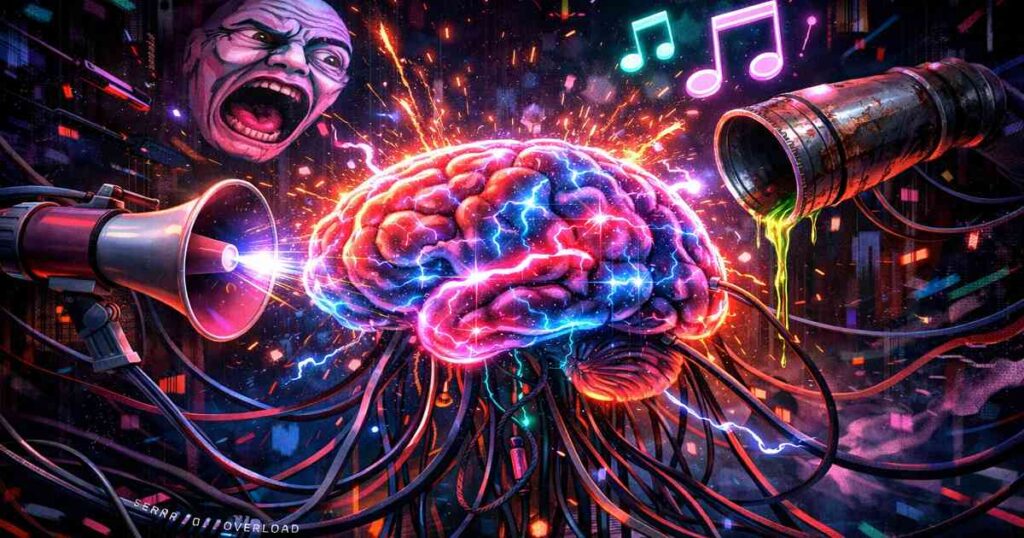
To older generations, the Goofy Ahh Man phenomenon looks like pure nonsense. However, there is a legitimate psychological underpinning to why this resonates so deeply with Gen Z and Gen Alpha.
Neo-Dadaism and Absurdism
Art historians and internet culturalists often compare modern meme culture to Dadaism, an art movement from the early 20th century that rejected logic and reason in favor of nonsense and irrationality. Just as Dadaists responded to the chaos of World War I with absurd art, Gen Z responds to the chaos of the modern world (pandemics, economic instability, climate change) with “Goofy Ahh” memes.
If you are interested in the historical parallels of nonsensical art, Wikipedia’s entry on Dadaism offers a fascinating look at how chaos has been used as an artistic expression for over a century.
The “Goofy Ahh Man” does not try to make a point. He exists purely to exist. The humor is surrealist. It is funny because it doesn’t make sense. The metal pipe falling sound is funny because a metal pipe has no business being in the video.
Sensory Overload as Entertainment
We live in an attention economy. The “Goofy Ahh” editing style is designed to retain attention through constant stimulation. The rapid cuts, the loud noises, and the distorted visuals keep the brain engaged because it is constantly trying to predict what comes next—and failing.
This is often referred to as “brain rot” content, a term used affectionately by the community. It suggests that you can turn your brain off and just let the sensory experience wash over you. In a high-stress world, the Goofy Ahh Man provides a low-stakes, high-dopamine escape.
How to Make Your Own Goofy Ahh Content
Participating in the trend is easier than it looks, but it requires specific tools. The “Goofy Ahh” aesthetic is not about high production value; it is about specific types of low production value.
The Toolkit
If you want to create a Goofy Ahh Man video or image, you need the following:
| Tool Category | Recommended Apps/Software | Purpose |
|---|---|---|
| Visuals | Snapchat, TikTok Effects | Use filters like “Shook,” “Big Nose,” or “Face Warp” to create the character. |
| Editing | CapCut | The industry standard for meme making. It has built-in transitions and effect libraries perfect for this style. |
| Audio | MyInstants, Voicemod | Access soundboards to download the Vine boom, Quandale Dingle voice, and cartoon slippage effects. |
| Text-to-Speech | TikTok (embedded), Uberduck.ai | Generate the robotic narration. Look for “Male Voice” or “SpongeBob” voices. |
Structuring the Narrative
A typical Goofy Ahh video follows a loose narrative structure:
- The Hook: A distorted image of the “Goofy Ahh Man” with a text overlay introducing the situation (e.g., “Me when I try to cook at 3 AM”).
- The Incident: A clip of someone failing at a task, tripping, or doing something strange.
- The Sound Spam: As the action happens, layer at least 3-4 different sound effects over the span of 5 seconds.
- The Freeze Frame: End on a freeze-frame of the most chaotic moment, perhaps applying a “deep fry” color filter.
The Future: Is the Goofy Ahh Man Here to Stay?
Internet trends usually have a shelf life of a few months. However, the Goofy Ahh Man has persisted for years. Why? Because it is adaptable.
The “Goofy Ahh” label has become a wrapper for all surrealist humor. As long as there are new sounds to exploit and new filters to distort faces, the trend will evolve. We have already seen it shift from simple images to complex “lore” videos detailing the lives of Quandale Dingle, to 3D animations, and even into modification packs for video games like Minecraft and Roblox.
Furthermore, the term has entered the general lexicon of Generation Z. It is used in real-life conversations to describe awkward situations or strange-looking objects. Once a meme becomes a vocabulary word, it cements its place in history.
Frequently Asked Questions (FAQs)
Here are the most common questions regarding the Goofy Ahh Man phenomenon, optimized for quick understanding.
What does “Goofy Ahh” actually stand for?
It stands for “Goofy Ass.” The spelling “Ahh” is used to bypass profanity filters on TikTok and other platforms, and it also mimics the specific pronunciation of text-to-speech AI voices.
Who is Quandale Dingle?
Quandale Dingle is a fictional character who became the face of the Goofy Ahh trend. Based on a viral screenshot of a login screen, internet users created a persona for him involving a distorted face, a deep voice, and a chaotic criminal history.
What creates the “Goofy Ahh” sound?
The soundscape is created by layering stock cartoon sound effects (like slip-and-slide whistles), the Vine boom, and sudden loud noises like metal pipes falling, often in rapid succession.
Is “Goofy Ahh” an insult?
Generally, no. While it can mean something looks silly or “scuffed,” it is usually used affectionately or comedically. Being called a “Goofy Ahh Man” implies you are being funny, weird, or chaotic, but not necessarily bad.
Where can I find Goofy Ahh sound effects?
Websites like MyInstants are popular repositories for these sounds. You can search for “Goofy Ahh sounds,” “Cartoon sounds,” or specific terms like “Vine boom” to find downloadable MP3s.
Why are the images always low quality?
The low quality (or “deep fried” look) is intentional. It signals to the viewer that the image has been shared many times, adding a layer of irony and “Internet heritage” to the joke. High-definition images often look too polished to be funny in this context.
What is the “Goofy Ahh Run”?
This refers to a style of running often depicted in these memes, characterized by flailing limbs, high knees, and a backward lean, usually accompanied by bongo drum sound effects.
Can I monetize Goofy Ahh content?
Yes, many creators on YouTube Shorts and TikTok monetize this content. However, you must be careful with copyright regarding specific music tracks. Standard cartoon sound effects are generally safe to use.
What creates the “Goofy Ahh” voice?
The voice is usually a pitch-shifted version of a standard text-to-speech voice, or a specific impression that mimics a deep, fried, vocal-fry heavy tone.
Is this trend considered “Brain Rot”?
Yes, the community often self-identifies this content as “brain rot.” This term refers to content that is so absurd and over-stimulating that it requires no intellectual effort to consume, serving as pure, mindless entertainment.
Conclusion
The Goofy Ahh Man is more than just a meme; he is a mascot for a generation that embraces chaos. In a digital world that is often overly curated, polished, and serious, the Goofy Ahh aesthetic offers a refreshing break. It celebrates the ugly, the distorted, and the noisy.
Whether you are looking to create your own content or simply want to understand why your younger relatives are laughing at a video of a falling metal pipe, understanding the Goofy Ahh Man is key to understanding modern internet culture. It is weird, it is loud, and it makes absolutely no sense—and that is exactly why it works.
Ready to dive deeper into the visual madness? Explore our gallery at GoofyAhh-pictures.com to find the ultimate collection of distorted faces and cursed images for your next project.
Explore More
Goofy Ahh Dog: Funniest Images That Broke the Internet
Goofy Ahh Car: Funniest Meme Car Images on the Internet