If you spend time on TikTok, Instagram Reels, or YouTube Shorts, you have likely seen a strange kind of humor. These videos use blurry pictures, loud sounds, and silly effects that feel random and messy. One image appears again and again: the Goofy Ahh Monkey. At first, it may look pointless or confusing. Still, many people find it funny and hard to ignore. This meme shows how online humor has changed and why chaos can feel fun. To understand it better, let’s look at where it came from and why it works.
The Etymology of “Goofy Ahh”
Before we discuss the monkey, we must understand the descriptor. The phrase “Goofy Ahh” is a phonetic spelling of African American Vernacular English (AAVE), specifically the phrase “Goofy Ass.” In internet slang, this transformation—often styled as “goofy ahh”—softens the profanity while emphasizing a specific tone of voice often found in text-to-speech generators or exaggerated vocal performances.
The term exploded in popularity alongside the rise of “21st Century Humor” videos. These compilations rely heavily on rapid-fire editing and sensory overload. The label “Goofy Ahh” became a catch-all term for anything that felt silly, unpolished, or bizarrely funny in a way that defied traditional logic.
When users search for “Goofy Ahh” content, they are not looking for high-production comedy. They are looking for raw, chaotic energy. This aesthetic is a direct rebellion against the polished, filter-heavy culture of early Instagram. It embraces the ugly, the loud, and the nonsensical.
Understanding this linguistic shift is crucial for SEO and content strategy. It isn’t just a typo; it is a cultural signifier that tells the audience exactly what kind of experience they are about to have: one that does not take itself seriously.
The Anatomy of a Goofy Ahh Monkey Meme
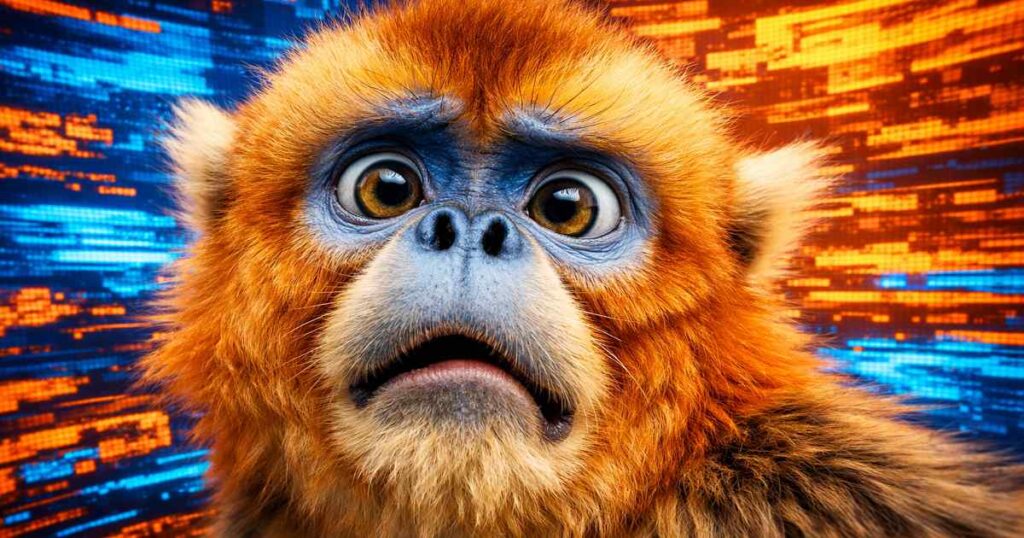
What exactly constitutes a Goofy Ahh Monkey meme? While the format is fluid, successful iterations share a distinct set of visual and auditory DNA. These memes are rarely about the monkey doing something genuinely funny in a traditional sense. Instead, the humor is derived from the context—or lack thereof—in which the image is presented.
Visual Characteristics
- Low Resolution: The images are often intentionally pixelated or “moldy,” implying they have been screenshotted and reposted thousands of times.
- Distortion: Facial features are often warped using liquidity filters. Eyes are bulged, snouts are stretched, and bodies are compressed.
- Specific Species: While any monkey can work, the Golden Snub-nosed Monkey and the Proboscis Monkey are favorites due to their naturally exaggerated features.
- Red Circles and Arrows: Creators often add useless red circles pointing to nothing specific, parodying clickbait YouTube thumbnails.
The “Uncle Productions” Aesthetic
Many of these memes parody the style of “Uncle Productions”—a slang term for video content that looks like it was edited by someone with zero technical skills. This includes using default fonts, terrible transitions, and watermarks from free editing software. This “anti-aesthetic” is a hallmark of modern internet surrealism.
According to Wikipedia, Internet memes often evolve through remixing and imitation, and the Goofy Ahh style is the ultimate example of this. It takes the concept of a meme and strips it down to its rawest, most chaotic elements.
The Soundscape: Why Audio Makes the Meme
You can look at a funny picture of a monkey, but it doesn’t become “Goofy Ahh” until you turn the sound on. The audio landscape of these memes is arguably more important than the visuals. The sound design is a tapestry of specific, recurring samples that trigger instant recognition and amusement in the viewer.
The “Goofy Ahh” Soundboard Essentials
If you are planning to create content in this niche, your sound library needs to be stocked with the following audio artifacts:
- The Vine Boom: A loud, bass-boosted thud sound effect originally used in Vine videos. It is used to punctuate moments that are not actually dramatic.
- Cartoon Slipping Noises: Classic Hanna-Barbera sound effects of characters running or slipping on banana peels.
- The “Bruh” Sound Effect: A recorded voice saying “Bruh” in a disappointed tone.
- Quandale Dingle Voice: A pitch-shifted, distorted voice narration that usually rambles about nonsensical scenarios involving the monkey.
- SpongeBob Music: The whimsical, production background music from SpongeBob SquarePants, often contrasted with chaotic visuals.
The interplay between these sounds creates a rhythm. The silence is often just as funny as the noise. A static image of a monkey staring blankly, accompanied by a single, deafening “Vine Boom,” is the peak of this humor style.
Psychological Appeal: Why Do We Laugh?
Why is a distorted monkey funny? To answer this, we have to look at the psychology of Gen Z humor, which is deeply rooted in absurdism and Dadaism. Much like the Dada movement of the early 20th century, which rejected logic and reason in response to a chaotic world, Goofy Ahh memes reject traditional joke structures (setup and punchline) in favor of pure sensory experience.
The humor is “post-ironic.” It acknowledges that the image isn’t funny, and the fact that we are pretending it is funny becomes the joke. It is a shared inside joke among millions of people who understand the specific language of the internet.
The Role of Surprise and Incongruity
Psychologically, humor often relies on the Incongruity Theory—the idea that we laugh when our expectations are subverted. In a Goofy Ahh Monkey video, the viewer might expect a cute animal video but is instead bombarded with loud noises and warping visuals. This shock to the system releases tension in the form of laughter.
Furthermore, the repetition of these memes creates a sense of community. Recognizing a specific “boing” sound effect or a specific monkey image signals that you are “in the know,” fostering a sense of belonging in the vast digital landscape.
Notable Variations and Spin-offs
The Goofy Ahh Monkey did not arrive alone. It brought with it a whole ecosystem of characters and variations that populate this weird corner of the internet. Understanding these variations helps keep content fresh and relevant.
The Quandale Dingle Connection
While not a monkey himself, the character of “Quandale Dingle”—a fictional persona characterized by a distorted face and a deep, rambling voice—is inextricably linked to Goofy Ahh Monkey memes. Often, the monkey is presented as a pet or an associate of Quandale Dingle. The lore is deep, nonsensical, and constantly evolving.
Comparison: Traditional Memes vs. Goofy Ahh Memes
| Feature | Traditional Memes (e.g., Grumpy Cat) | Goofy Ahh Memes |
|---|---|---|
| Visual Quality | Clean, readable text, clear image | Pixelated, distorted, deep-fried |
| Joke Structure | Setup -> Punchline | Randomness, loud noises, shock |
| Audio | Usually silent (image-based) | Essential, loud, chaotic |
| Target Audience | General Internet Users | Gen Z, TikTok Natives |
How to Create Your Own Goofy Ahh Content
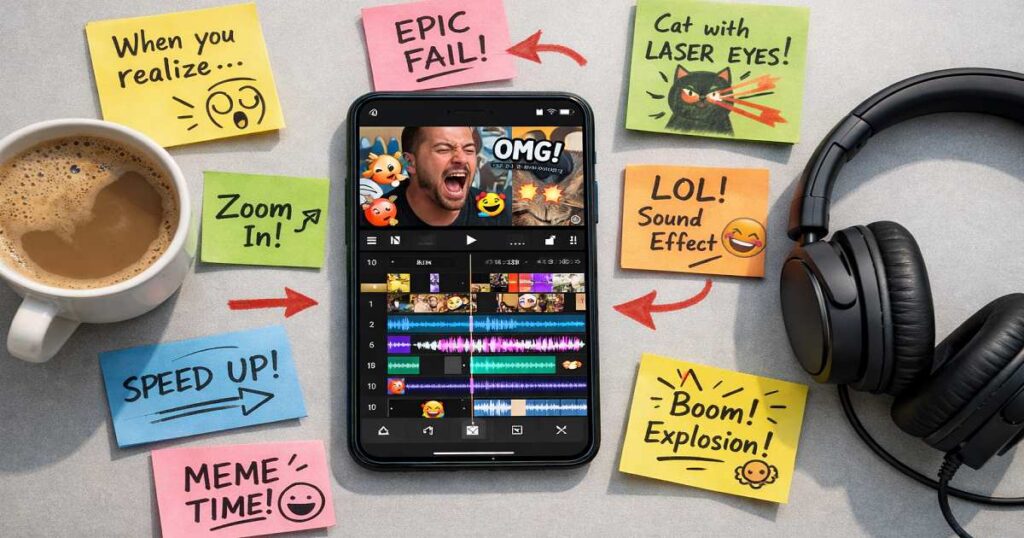
Creating a viral Goofy Ahh Monkey video is an art form that requires specific tools and a lack of perfectionism. If you try too hard to make it look “good,” you will fail. Here is a practical workflow for aspiring meme lords.
Step 1: Sourcing the Visuals
Do not look for high-definition stock photos. Go to Google Images and search for generic terms like “funny monkey” or “fat monkey.” Look for images that have weird lighting or awkward poses. Save the image and then re-save it multiple times to degrade the quality naturally, or use an online tool to lower the JPEG quality.
Step 2: The Editing Software
You do not need Adobe Premiere Pro. In fact, mobile editors like CapCut are preferred because they offer the specific transitions and effects that define the genre. Look for effects like “Fisheye,” “Swirl,” and “Shake.”
Step 3: Layering the Audio
This is the most critical step. Layer your sounds heavily. Do not just place one sound effect; stack them. Combine a “cartoon running” sound with a “metal pipe falling” sound. Use text-to-speech generators for any dialogue. The more robotic or distorted the voice, the better.
For additional resources on digital trends and search behavior surrounding these topics, Google Trends is an invaluable tool to see which specific sounds or characters are peaking in popularity at any given moment.
The Future of “Goofy Ahh” Humor
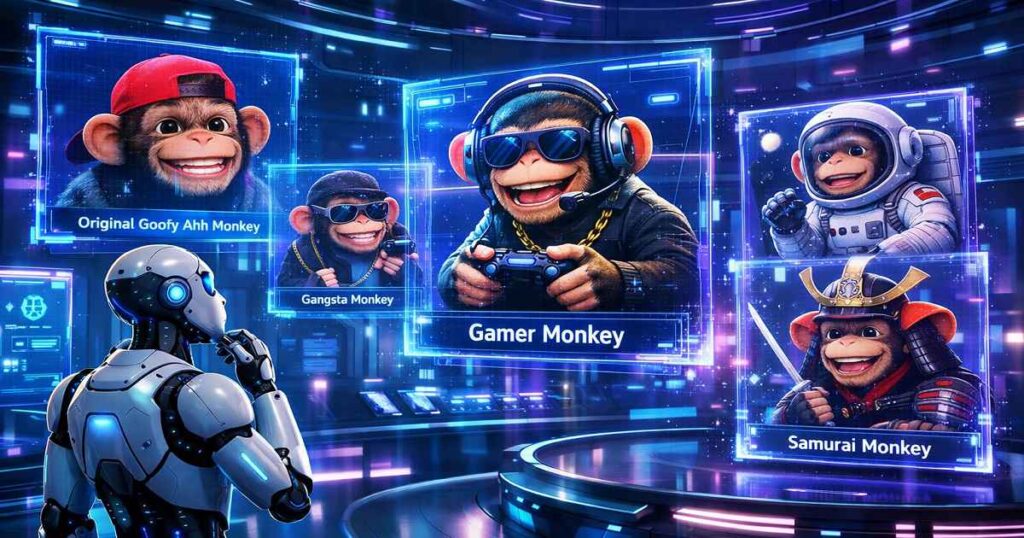
Is the Goofy Ahh Monkey here to stay? Internet trends move at lightning speed. What was funny in 2022 might be “cringe” by 2025. However, the underlying principle of absurdist humor is timeless. While the specific monkey images or the specific “Quandale Dingle” voice might fade, the appetite for high-energy, chaotic, and nonsensical content is likely to grow.
As AI-generated content floods the internet, we may see a new wave of “Goofy Ahh” content that is entirely synthesized by artificial intelligence—creating monkeys that never existed and sounds that have never been heard. This evolution will likely push the boundaries of surrealism even further.
Conclusion
The Goofy Ahh Monkey is more than just a funny picture; it is a cultural artifact of the 2020s. It represents a generation’s humor that values chaos over structure and raw energy over polish. Whether you find it hilarious or confusing, its impact on social media engagement and meme culture is undeniable.
If you are a creator, embrace the chaos. Don’t be afraid to lower the resolution, crank up the bass, and let the absurdity reign supreme. Browse our gallery at GoofyAhh-pictures.com for the latest inspiration, and remember: in the world of Goofy Ahh, the only rule is that there are no rules.
Explore More
Goofy Ahh Dog: Funniest Images That Broke the Internet
Goofy Ahh Car: Funniest Meme Car Images on the Internet
Frequently Asked Questions (FAQs)
What does “Goofy Ahh” actually mean?
It is a phonetic spelling of “Goofy Ass,” originating from AAVE. In internet slang, it describes something incredibly silly, weird, or cartoonish, often associated with low-quality videos and exaggerated sound effects.
Who started the Goofy Ahh Monkey meme?
While there is no single inventor, the trend gained massive traction on TikTok in late 2021 and early 2022 through various “shitposting” accounts that combined random monkey images with the “Quandale Dingle” audio narratives.
What are the most common sound effects used in these memes?
The “Vine Boom,” cartoon slipping/running sounds, the “Bruh” sound effect, SpongeBob background music, and the metallic clang of a falling pipe are the most essential audio elements.
Why are the images always low quality?
The low resolution (or “moldy” quality) adds to the humor by implying the image has been shared and screenshotted thousands of times. It fits the “trashy” or “low-effort” aesthetic that defines the genre.
Is the Goofy Ahh Monkey a real monkey?
Yes, the images usually feature real species. The most common ones are the Golden Snub-nosed Monkey (known for its blue face) and the Proboscis Monkey (known for its large nose), though they are often heavily edited.
How can I make my voice sound like a Goofy Ahh meme?
Creators often use pitch-shifting audio filters to make their voice sound deeper and more wobbly. Text-to-speech generators found in apps like TikTok and CapCut are also widely used.
Is this humor considered “Brain Rot”?
Yes, “Brain Rot” is a slang term often used affectionately by Gen Z to describe content that is so chaotic and nonsensical that it feels like it is melting your brain. Goofy Ahh content fits this category perfectly.
Can I monetize Goofy Ahh content on YouTube?
Yes, many channels successfully monetize this content. However, you must add significant transformative value through editing and commentary to avoid copyright strikes for reused content or music.
What is the “Quandale Dingle” lore?
Quandale Dingle is a fictional character often associated with these memes. The “lore” involves a series of absurd, narrated crimes and mishaps attributed to the character, usually read in a distorted voice over gameplay footage or monkey images.
Where can I find the best Goofy Ahh pictures?
You can find curated collections on dedicated meme sites, subreddits like r/shitposting, Pinterest, and of course, right here on GoofyAhh-pictures.com.