If you scroll through TikTok, Instagram, or Twitter during Halloween, you may have seen the Goofy Ahh Pumpkin. It looks strange, a little silly, and sometimes even creepy. The face is uneven, the smile feels wrong, and funny sound effects often play with it. Many people laugh, while others feel confused. So what does this pumpkin really mean, and why do people enjoy it so much? This trend is not just about pumpkins or jokes. To understand it better, let’s look at where it started and why it became popular online.
What Does “Goofy Ahh Pumpkin” Actually Mean?
To understand the pumpkin, you first have to understand the phrase “Goofy Ahh.” This slang term is a phonetic spelling of “Goofy Ass,” derived from AAVE. In internet culture, the spelling “ahh” is used to mimic a specific vocal cadence, often associated with exaggerated or comedic deliveries found in viral videos. When someone describes an image, sound, or person as “goofy ahh,” they are characterizing it as ridiculous, silly, absurd, or bizarre.
Therefore, a Goofy Ahh Pumpkin is a Jack-o’-lantern that defies the traditional “scary” or “perfect” aesthetic of Halloween. It is not meant to be terrifying in the classic horror movie sense, nor is it meant to be a beautiful piece of art. Instead, it leans heavily into the “uncanny valley”—it looks slightly wrong, poorly made, or unintentionally hilarious.
The humor comes from the juxtaposition. We expect pumpkins to be festive. When we see one that looks like it is contemplating its own existence, or one that has been carved with a strangely realistic human expression, it triggers a laugh response based on pure absurdity. These pumpkins often feature wildly asymmetrical eyes, teeth that look too human, or shapes that suggest the pumpkin is melting.
According to Wikipedia’s definition of internet memes, a meme acts as a unit of cultural transmission. The Goofy Ahh Pumpkin transmits a feeling of shared confusion and delight in the weird, making it a perfect vessel for social bonding in the digital age.
The Origins and Evolution of the Trend
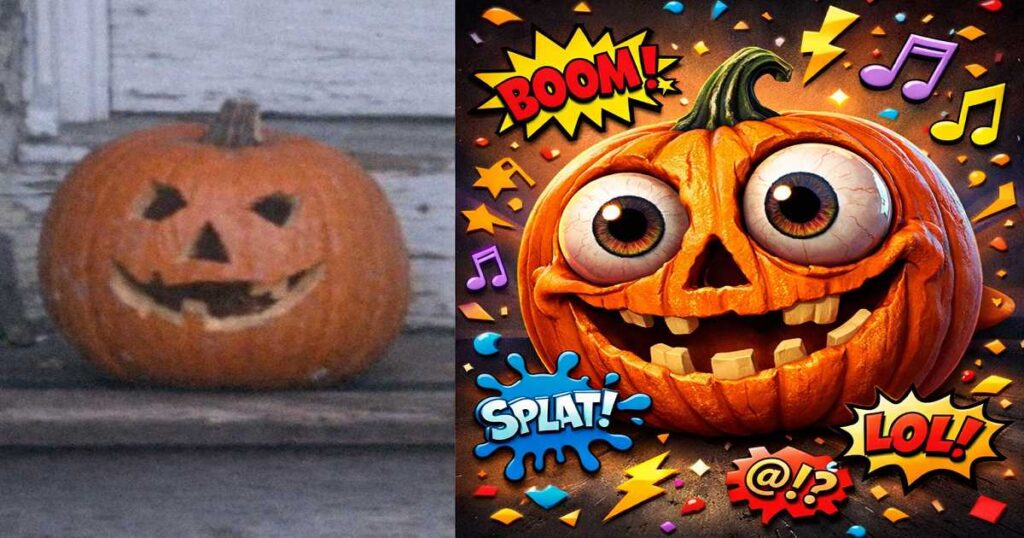
The “Goofy Ahh” phenomenon didn’t start with pumpkins. It began as a broader audio trend on TikTok. Creators started mixing “Quandale Dingle” lore—a fictional narrative involving distorted images and chaotic storytelling—with a specific library of sound effects. These sounds typically include:
- Classic cartoon slipping and falling noises.
- The “Vine Boom” sound effect.
- Exaggerated snoring noises (specifically the “auughhh” sound).
- Spongebob Squarepants walking sounds.
As this audio trend peaked, users began looking for visuals that matched the chaotic energy of the sounds. Enter the “cursed” pumpkin images. Pictures of poorly carved pumpkins, rotting gourds, or pumpkins with strangely human proportions began circulating. When paired with the “Goofy Ahh” audio, a specific sub-genre of meme was born.
The evolution followed a standard internet trajectory:
- The Discovery Phase: Users find old photos of ugly pumpkins from the early 2000s or obscure blog posts.
- The Audio Pairing: Creators overlay these images with “Goofy Ahh” remix tracks.
- The Replication Phase: People start carving real pumpkins specifically to look “goofy” to participate in the trend.
- The AI Expansion: Users utilize AI image generators to create hyper-realistic, yet impossible, goofy pumpkins.
Key Characteristics of a Goofy Ahh Pumpkin
Not every ugly pumpkin qualifies as a “Goofy Ahh Pumpkin.” To truly fit the definition and rank on GoofyAhh-pictures.com, the image needs to possess specific visual traits that signal “low quality” or “cursed energy.” It is an art form of incompetence.
1. The “Lightskin Stare” or Uncanny Eyes
One of the most defining features is the eyes. A standard Jack-o’-lantern has triangle eyes. A Goofy Ahh Pumpkin often has eyes that are eerily realistic, overly detailed, or just two tiny dots on a massive face. The “Lightskin Stare” refers to a separate meme about intense, seductive gazing, often applied to pumpkins to make them look strangely flirtatious.
2. The Distorted Mouth
Forget the jagged, scary teeth. These pumpkins often feature mouths that are too wide, have square “human” teeth, or look like they are grimacing in pain. The “lip bite” expression is a common favorite in this category.
3. Low-Resolution Quality
High-definition photography often ruins the joke. The funniest images are often “deep-fried,” meaning the saturation and contrast have been cranked up, or the image quality has been intentionally lowered to make it look like it was taken on a flip phone in 2008.
4. The Contextual Void
The pumpkin is usually photographed in a messy room, on a dirty porch, or in a dark void. The lack of a polished background adds to the “cursed” vibe, suggesting that the photographer didn’t care about aesthetics, which paradoxically creates the aesthetic.
The Psychology of “Broken” Humor
Why do we find this funny? It ties into the concept of “anti-humor” and the Dadaist movement of the early 20th century. Dadaism rejected logic and embraced chaos. Similarly, Gen Z humor rejects the polished perfection of the Instagram era.
When you see a pumpkin that looks pathetic or weird, it breaks the pattern of what you expect to see online. Most content is curated to look good. “Goofy Ahh” content is curated to look bad. This subversion of expectations releases tension. It is relatable because it is imperfect. In a world where AI and technology are constantly striving for perfection, there is something deeply human and grounding about a pumpkin that looks stupid.
How to Carve Your Own Goofy Ahh Pumpkin (A DIY Guide)
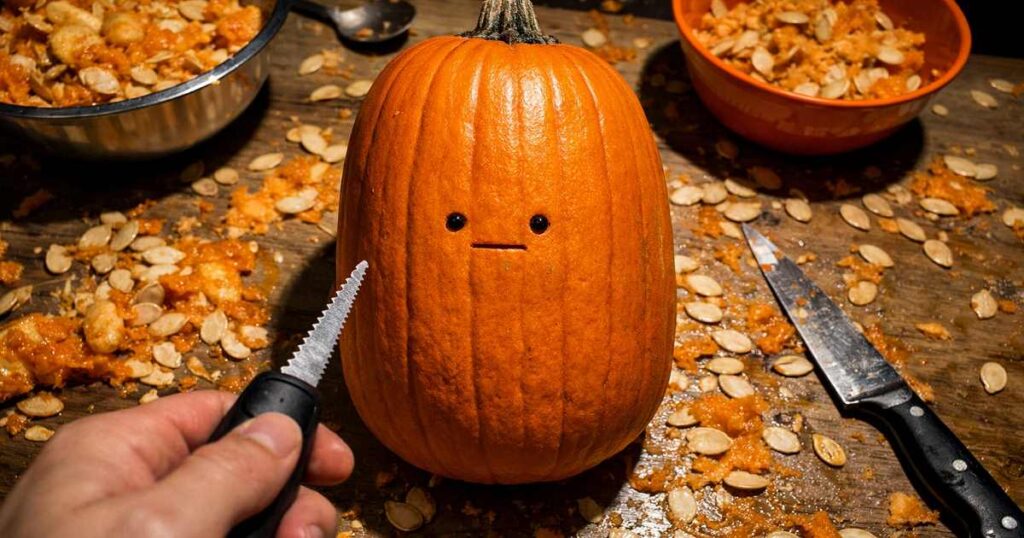
Want to go viral this Halloween? Carving a traditional spooky face won’t cut it. You need to channel your inner chaos. Here is a step-by-step guide to creating a pumpkin that captures the “Goofy Ahh” energy perfectly.
Step 1: Choose the Wrong Pumpkin
Do not buy the perfect, round, orange pumpkin. Look for one that is lopsided, has strange warts, is elongated, or is partially green. The canvas itself should look goofy before you even pick up a knife.
Step 2: The Sketch (Or Lack Thereof)
Most professional carvers use stencils. To achieve true goofiness, freehand your design with a thick marker. Draw eyes that are too far apart. Draw a mouth that is slightly crooked. If you make a mistake, keep it. Mistakes are the essence of this meme.
Step 3: The Carving Technique
When carving, don’t clean the edges too well. Leave some strings hanging. If you are going for the “human teeth” look, try to shave the skin of the pumpkin rather than cutting all the way through. This creates a flesh-colored tooth that looks incredibly unsettling when lit up.
Step 4: The Lighting
Instead of a warm candle, use a harsh white LED or the flashlight from your phone. This creates hard shadows and highlights the imperfections of your carving. Alternatively, use a red light to give it a “cursed” aura.
Top 5 Most Viral Goofy Ahh Pumpkin Styles
To give you inspiration, here are the five archetypes of goofy pumpkins that historically perform best on social media platforms.
| Pumpkin Style | Visual Description | Vibe/Energy |
|---|---|---|
| The Quandale | Elongated nose, small eyes, massive chin. | Mischievous, plotting, viral audio potential. |
| The Sobbing Gourd | Watery eyes (using Vaseline), downturned mouth. | Sad, pathetic, relatable despair. |
| The Braced Smile | Carved teeth with tinfoil added to look like braces. | Awkward middle school energy. |
| The Micro-Face | A massive pumpkin with a face carved only 2 inches wide. | Minimalist, confusing, hilarious scale. |
| The Realistic Human | Uncannily realistic eyes and lips, no nose. | Terrifying, cursed, deeply uncomfortable. |
The Role of AI in the Goofy Ahh Movement
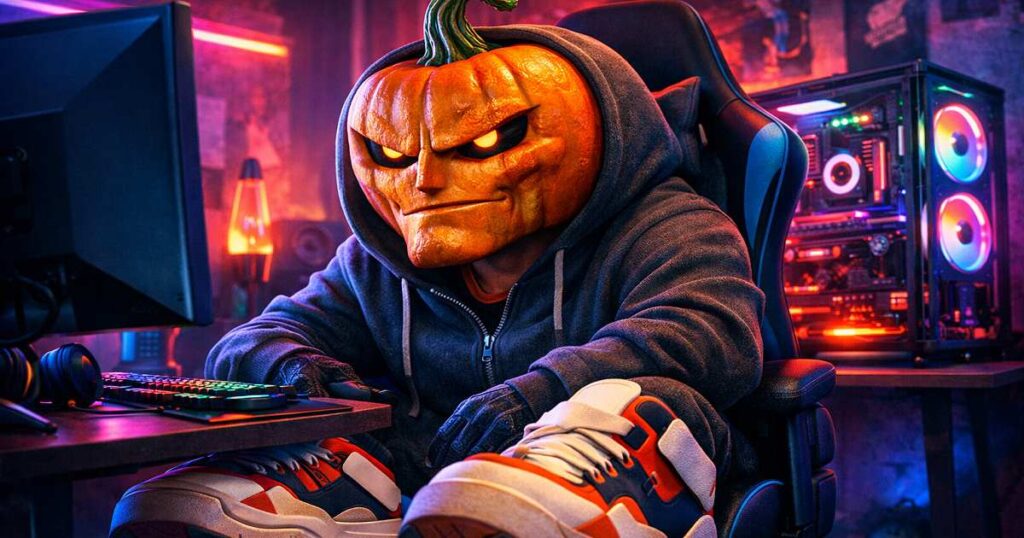
Recently, Artificial Intelligence has taken the Goofy Ahh Pumpkin to new heights. Generators like Midjourney and DALL-E allow users to input prompts like “Pumpkin with human teeth eating a burger, photorealistic, 4k.” The results are often more disturbing and hilarious than anything a human could physically carve.
This has led to a flood of “fake” goofy pumpkins on GoofyAhh-pictures.com and similar sites. While some purists prefer the physical vegetable, the AI-generated images allow for a level of distortion and absurdity that defies physics. These images often feature pumpkins with limbs, pumpkins wearing streetwear, or pumpkins engaging in human activities like filing taxes or gaming.
For search engines, these AI images are unique entities. They are often tagged with “AI art” or “synthetic media,” but to the average user, they are just another piece of the meme puzzle. This fusion of high-tech generation and low-brow humor is the hallmark of modern internet culture.
Social Media Strategy: Posting Your Pumpkin
If you have created (or generated) a Goofy Ahh Pumpkin, you need to know how to share it effectively. The caption and hashtags are just as important as the image.
Caption Ideas:
- “Bro really said 🎃💀”
- “Who let him cook?”
- “Unspoken rizz from the gourd.”
- “Me at 3am looking for shredded cheese.”
Hashtags: Use a mix of broad and niche tags. #Halloween, #PumpkinCarving, #GoofyAhh, #CursedImages, #Memes, #BrainRot. The term “Brain Rot” is adjacent to Goofy Ahh culture, referring to content that is so silly it feels like it is melting your brain.
Conclusion: Embrace the Absurdity
The Goofy Ahh Pumpkin is more than a seasonal trend; it is a testament to the internet’s ability to find joy in the ugly, the broken, and the weird. It rejects the pressure to be perfect and invites us to laugh at the chaotic nature of existence—represented by a rotting vegetable with a crooked smile.
Whether you are here to download a funny picture for your group chat, or you are looking for inspiration to carve a pumpkin that will terrify your neighbors in a confusing way, GoofyAhh-pictures.com is your home for the best content. So, grab your carving kit, turn up the cartoon sound effects, and make something truly goofy this year.
Explore More
Goofy Ahh Car: Funniest Meme Car Images on the Internet
Goofy Ahh Dog: Funniest Images That Broke the Internet
Frequently Asked Questions (FAQs)
What does “Goofy Ahh” actually stand for?
The term “Goofy Ahh” is a phonetic spelling of “Goofy Ass,” originating from AAVE. It is used on the internet to describe something that is silly, ridiculous, absurd, or high-energy chaos.
Where did the Goofy Ahh Pumpkin meme start?
It originated on TikTok, evolving from the “Goofy Ahh” audio trends that used cartoon sound effects. Users began pairing these sounds with images of poorly carved or “cursed” looking pumpkins.
How do I make a pumpkin look “Goofy Ahh”?
Focus on imperfections. Carve eyes that are too realistic or too small, give it human-like teeth, or choose a misshapen pumpkin. The goal is to make it look “cursed” rather than scary.
What sound effects are used in Goofy Ahh videos?
Common sounds include the “Vine Boom,” cartoon slipping noises, exaggerated snoring (“auughhh”), bell dings, and distorted bass boosts.
Is the Goofy Ahh Pumpkin trend only for Halloween?
While it peaks in October, “Goofy Ahh” memes are year-round. However, the pumpkin variation is specifically tied to the Halloween season and resurfaces every autumn.
What is the “Lightskin Stare” pumpkin?
This is a variation where the pumpkin is carved to have narrowed eyes and a smirk, mimicking the viral “Lightskin Stare” meme (often associated with the model creation Zoolander or TikTok trends).
Can I use AI to make Goofy Ahh Pumpkins?
Yes, many viral images are created using AI tools like Midjourney or DALL-E. Prompts usually involve keywords like “uncanny,” “realistic human face on pumpkin,” or “cursed image.”
Why are these pumpkins called “cursed”?
In internet slang, a “cursed image” is one that evokes a feeling of confusion or unease due to low quality, odd lighting, or bizarre subject matter. These pumpkins fit that description perfectly.
Who is Quandale Dingle in relation to this meme?
Quandale Dingle is a fictional internet character often associated with “Goofy Ahh” memes. While not a pumpkin himself, his lore and the associated distorted audio are often paired with goofy pumpkin visuals.
Where can I find more Goofy Ahh pictures?
You can find them on social media platforms like TikTok, Twitter (X), and Instagram, or on dedicated meme repositories and websites like GoofyAhh-pictures.com.